Brand: Telefunken

  • Tekefunken M80 GOLD Series

    Tekefunken M80 GOLD Series

    TELEFUNKEN M80 Gold Dynamic Microphone Comes with a variety pack of 6 TELEFUNKEN guitar picksAre you looking for that special microphone? The one that will make your friends jealous? Do you want a mic that not only looks flashy but sounds great too? Well look no further than the M80 Gold. Designed at the request of the pop-punk band AFI, the M80 Gold was originally slated to be a limited edition, but we had such a demand for them we decided to add it to our Dynamic Series.

    AFI fell in love with the M80, not just because of its performance, but also its durability. “The lead vocal mic hits the stage about 5 times per show, and not only did the M80 not break, but the one that hit the stage every night sounded exactly the same as the other 3 we use at the end of the tour !! Amazing !!! And the gain before feedback is the best I have ever experienced. I will never use another mic on stage for vocals !!!” says Jamie Rephann (FOH for AFI, ZZ Top, 311, etc.). After just one tour, they were convinced. So much so that they have ordered 2 Special Limited Edition Gold M80s to match not just their set, but their vibe.

    TELEFUNKEN Elektroakustik has created the M80 to give the user a superior alternative to the midrange-laden character of the “industry standard microphone.”

    Featuring a wider frequency response and higher SPL capabilities the M80 delivers condenser-like performance in a rugged dynamic design, producing a microphone equally suitable for voice, instruments or drums on both stage and in the studio.

    Due to its low mass capsule and super thin (yet surprisingly rugged) capsule membrane the M80 presents a wider range of emotion from a live vocal with an intimacy that has been traditionally reserved for studio quality condenser microphones.

    The head and capsule assembly has been designed to reduce proximity effect to which nets added low end clarity for vocals, while still providing “strength” and “authority” and an “open,” “airy” character without adding danger of upper midrange feedback or “honk.”

    The M80 also features an American made custom wound impedance matching transformer which is where the magic really takes place. When coupled with our proprietary capsule assembly, the results have won hearts and minds in far less time since it’s introduction than we ever imagined possible.

    Each Special Limited Edition Gold M80 comes with a leather bag, mic clip, and a complete bonus set of TELEFUNKEN Guitar Picks made from graphite enriched Delrin.

    Following the M80 Chrome, TELEFUNKEN Elektroakustik naturally proceeded to the next idea in custom designs: the M80 Gold! The M80 Gold shines with a vibrancy that no one can ignore; it’s sure to catch everyone’s eyes! If there is any color that shows the M80’s worth in quality, this is it.

    Featuring a wider frequency response and higher SPL capabilities the M80 delivers condenser-like performance in a rugged dynamic design, producing a microphone equally suitable for voice, instruments or drums on both stage and in the studio.

  • Telefunken C12 Diamond Series Microphone

    Telefunken C12 Diamond Series Microphone

    If there were ever a microphone that was the epitome of classic, hi-fidelity sound, it would be the C12. Its silky smooth top end provides plenty of air without sounding harsh or artificial. Its midrange speaks clearly and articulately, capturing the source with a natural presence. Its low end is tight and focused, perfectly balanced with the rest of the frequency range.

     
    • About This Mic
    • Specifications
    • Gallery
    • Who’s Using This Mic
    • Accessories


    The large diaphragm vacuum tube-based C12 is a fantastic choice for all types of instruments, lending itself especially well to drum overheads, acoustic guitar, and vocals. Its silky smooth top end provides plenty of air without sounding harsh or artificial. Its midrange speaks clearly and articulately, capturing the source with a natural presence. Its low end is tight and focused, perfectly balanced with the rest of the frequency range.

    If there were ever a microphone that was the epitome of classic, hi-fidelity sound, it would be the Austrian-designed C12. Original developed by AKG Acoustics in 1953, the C12 is revered for its smooth, airy frequency response. The design of the C12 was unique in its remote capsule polarizing technology. The ability to change the capsule’s polar response variably between cardioid, omnidirectional and figure-8 (and six intermediate patterns between) from the power supply instead of with switches on board the microphone made the C12 the most versatile large diaphragm tube microphone of its time. Considered by many to be the finest sounding microphone ever produced, original C12 microphones are still in use in recording studios throughout the world.

    TELEFUNKEN Elektroakustik is proud to manufacture the C12 once again. Each microphone features a newly manufactured CK12 capsule built from the original manufacturer’s specifications. The amplifier circuit utilizes a European-made Haufe (manufacturer of the original) output transformer built to match the original, and a microphone grade NOS GE JAN 6072a vacuum tube. Every part of the C12 microphone has been reverse engineered and recreated exactly to the original to match not only its sonic integrity, but also to preserve the impressive point-to-point construction and aesthetic of the original. Coveted by an extensive list of professional recording engineers, the TELEFUNKEN Elektroakustik C12 historic reissue is an exceptional microphone that will be a treasured addition to your microphone collection for many decades to come.

    Each C12 microphone comes complete with M910 power supply, M810 25′ quad-shielded ACX-7 tube microphone cable, M710elastic shock mount, FC10 locking flight case and WB10 wooden microphone box. All TELEFUNKEN Elektroakustikmicrophones are hand-built and assembled in Connecticut, USA.


    .

  • Telefunken ELA M 251

    Telefunken ELA M 251

    Debatably the most gorgeous sounding mic ever generated, the TELEFUNKEN ELA M 250 / 251 was actually sold in 2 variants: the “ELA M 250E / 251E” version took advantage of a 6072a tube, while the “ELA M 250 / 251” version included a TELEFUNKEN AC-701 tube. The “no-suffix” mics were developed to please the standardized demands of the German and Austrian national broadcast systems. While both variations of these mics have accomplished fabled stature in the contemporary audio field, the road to achieving this legendary standing was far from immediate.

    In 1947 Neumann GmbH to begin with developed the U-47 microphone. From 1947 to 1958 TELEFUNKEN GmbH used their developed global circulation network for the items generated by Neumann GmbH, which were sold under the TELEFUNKEN label with a TELEFUNKEN company logo badge.

    In 1958 when Neumann GmbH tipped off TELEFUNKEN GmbH that they had determined to not renew their circulation contract, TELEFUNKEN communicated to AKG Acoustics pertaining to the option of AKG creating a “U-47 like” design for TELEFUNKEN to plug into their global circulation network.

    This U-47-esque microphone was to be known as the ELA M 250. Like the U-47 this new mic featured the design choice (cardioid as well as omni-directional) switch on the head of the mic. Around 1958 Neumann GmbH additionally released their U-48 mic which featured cardioid and “figure 8” pattern selection. The TELEFUNKEN ELA M 251 was an amalgam of the two as it presented 3 pattern (cardioid, figure 8 as well as omni-directional) option capability.The switch housing at the base of the cap assembly is where the similarity in between the Neumann GmbH U-47 / U-48 and also the ELA M 250 / 251 microphone series finishes.

    The TELEFUNKEN ELA M 250 / 251 components an edge terminated, twin backplate CK-12 cap (as found in the AKG Acoustics GmbH C-12). The amp was the same circuit found in the C-12 that included a GE 6072 tube as well as a Haufe 14:1 percentage outcome transformer. As previously stated, a system that included a TELEFUNKEN AC-701 tube was additionally produced to satisfy the technical specs of German and also Austrian program in the course of the period when these microphones were originally constructed.

    While the C-12 accomplished pattern variety with an outboard changing gadget that was connected to the power supply, the ELA M 250 / 251 gotten rid of that addition to the system and also lessened both the amount of cords that had to go to the mic in addition to the expenditure of the outside pattern choice box.

    The style designers at AKG Acoustics also thought of yet another extremely handy component, which was the ability to minimize the amount of time required to accomplish “industry replacements” of the mic. Both the C-12 and also U-47 / 48 microphones call for a reasonable bit of know-how, a constant hand, along with a couple of screwdrivers to get to the inner workings of the mic.All that was needed to “area repair work” the ELA M 251E was the elimination of the ring on the bottom of the body and also the metal body tube would definitely slide quickly (no resources necessary !!). When the body tube was removed either the capsule or the amp could be changed in under a min conserving precious time when under the gun in a program or orchestral recording environment.The amplifier in the ELA M 250 / 251 series is housed in a molded plastic enclosure. The cap is held in place by 2 metal struts that jack the outside of the amplifier real estate. By implementing this system, either of these important parts could be replaced in seconds and the session might continue while either system component could be sent to the technological shop for “element degree repair work”. This benefit was something the broadcasters of the time found to be a major plus as they had thousands of bucks of musicians sitting around for the live new music broadcasts of the day. Any time conserved minimized the expense of the session, as well as contributed to the high quality of the program.

    However for TELEFUNKEN GmbH, these field replacement equippings additionally showed to be a sales inhibition outside of the orchestral recording planet as the plastic littles used in these microphones added substantial price to the construction of the microphones.The included cost made them considerably more costly at the time than the Neumann GmbH and also AKG Acoustics GmbH products, hence the non Government had facilities of the amount of time did not embrace these systems as readily as TELEFUNKEN GmbH might have liked. It is believed that less compared to 3700 complete initial ELA M systems were constructed from 1960 to 1965 when TELEFUNKEN GmbH terminated sales of the mic.
    Today, prime examples of old ELA M 250 / 251 [both “E” as well as “non E”] mics have actually come to be rare and also strongly sought after jewels, commanding tens of hundreds of bucks on the vintage market. You will certainly find that the TELEFUNKEN Elektroakustik recreations exemplify the very best top qualities of the very best examples of these fabled creatures, and also while a lot more costly compared to many modern microphones, they are true to the heritage of their 40 + year old brethren.

    Today TELEFUNKEN Elektroakustik has actually delivered advancement to this traditional system through the development of the CK-13 cap. While the CK-13 can be fit to any sort of existing ELA M 250 / 251 system it can easily even be discovered in the ELA M 251 T which is offered with your preferred reseller through the “customized store”.

  • Telefunken ELA M 251 Stereo Set

    Telefunken ELA M 251 Stereo Set

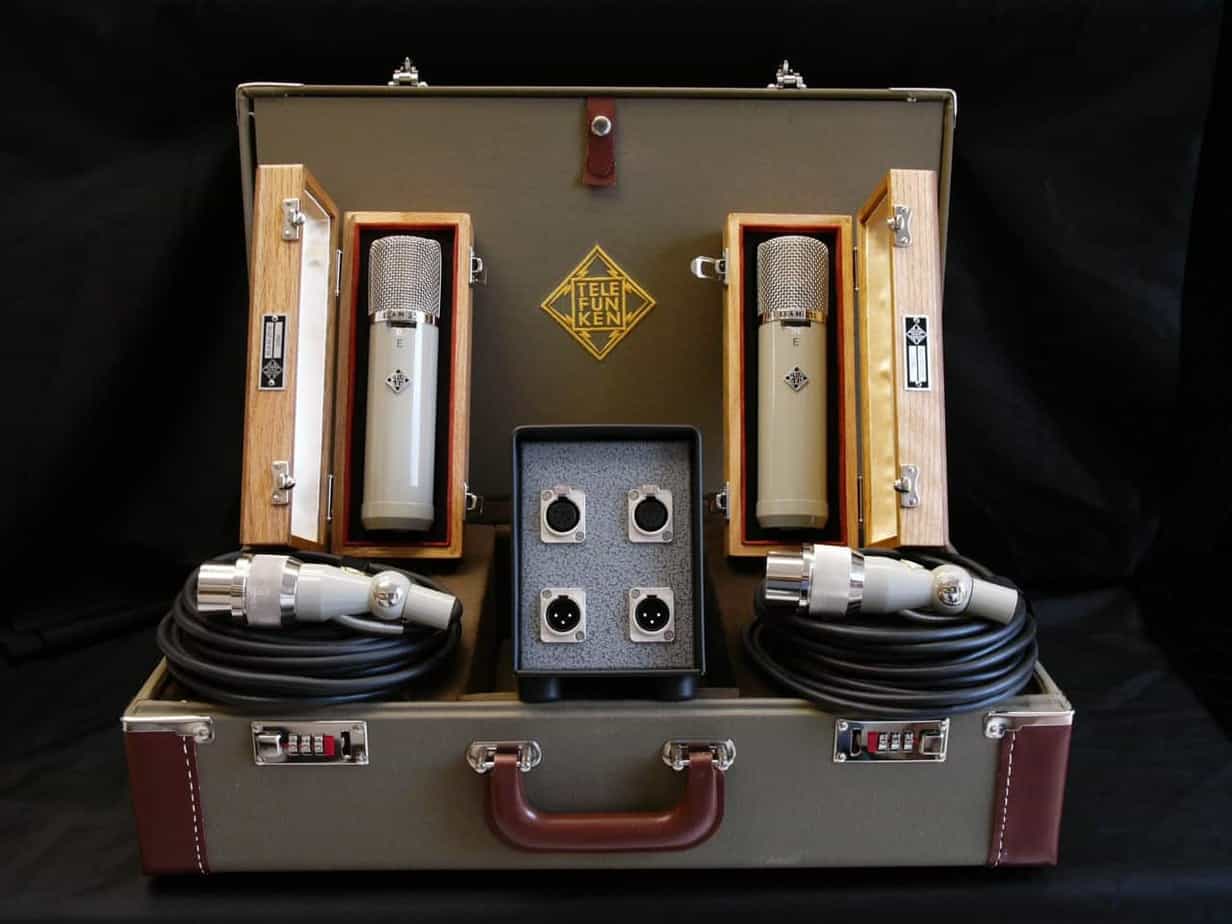
    TELEFUNKEN Elektroakustik is proud to offer matched stereo sets of their ELA M 251 large diaphragm tube microphone, featuring a custom dual power supply capable of powering both microphones at one time, and a special locking flight case that will carry both sets of microphones, cables, wooden boxes, and the dual power supply.

    The ELA M 251 is arguably the greatest large diaphragm tube microphone ever built. Sought after by the world’s best recording engineers, producers, and musicians in the know, the ELA M 251 offers a real-life sonic characteristic second to no other recording tool or microphone. The microphone features a new CK12 capsule (built from the original manufacturers technical specifications), a Haufe (manufacturer of the original) output transformer built to match the original, and a microphone-grade TELEFUNKEN New Old Stock AC701 vacuum tube just like the original systems.

    (Click To Enlarge Photo)

    Stereo microphone techniques are often used for recording classical music and large signal sources like orchestra, choirs, and large chamber groups. They can also effectively be used on drum overheads, acoustic guitars, piano, and percussion. The TELEFUNKEN ELA M 251 Stereo Set will allow versed recording engineers a variety of stereo recording techniques, including X/Y coincidental pairs when utilizing the mics in their cardioid patterns, or A/B spaced pairs while using the mics in either cardioid or omni. The option of a Blumlein pair is also available with both microphones set to figure of 8, as well as the traditional M/S (mid / side) technique when using one mic in cardiod and the other in figure of 8.

    Every component in the each of the two TELEFUNKEN ELA M 251microphones is hand-selected, allowing as close a match as is possible between each system. Capsules are tuned to each other; transformers and tube are tested for matched gain and frequency response. These sets offer the user the knowledge and comfort that the tools they are using will give identical responses for their most important stereo recording.

    Each ELA M 251 STEREO SET comes complete with a dual M950Spower supply, 2x M850 25′ dual-shielded ACX-7 tube microphone cable, 2x WB50 wooden microphone boxes and a FC10 locking flight case

  • Telefunken ELA M 251E

    Telefunken ELA M 251E

    Possibly the most beautiful seeming microphones ever before manufactured, today vintage ELA M 250 / 251 [both ‘E’ as well as ‘non E’] mics have become rare and also extremely searched for jewels, regulating 10s of thousands of bucks on the vintage market. You will definitely find that the TELEFUNKEN Elektroakustik recreations show the best top qualities of the very best instances of these mythical beasts, and also while more expensive compared to most modern-day microphones, they are true to the ancestry of their 40 + year old brethren.

    Arguably the most beautiful sounding microphone ever produced, the TELEFUNKEN ELA M 250 / 251 was originally sold in two variations: the “ELA M 250E / 251E” version utilized a 6072a tube, while the “ELA M 250 / 251” version contained a TELEFUNKEN AC-701 tube. The “no-suffix” microphones were built to satisfy the standardized requirements of the German and Austrian national broadcast systems. While both versions of these microphones have achieved legendary stature in the modern recording industry, the road to achieving this legendary status was far from instantaneous.

    In 1947 Neumann GmbH first built the U-47 microphone. From 1947 to 1958 TELEFUNKEN GmbH used their established global distribution network for the products produced by Neumann GmbH, which were sold under the TELEFUNKEN name with a TELEFUNKEN logo badge.

    In 1958 when Neumann GmbH notified TELEFUNKEN GmbH that they had decided to not renew their distribution contract, TELEFUNKEN reached out to AKG Acoustics about the possibility of AKG creating a “U-47 like” model for TELEFUNKEN to plug into their global distribution network.

    This U-47-esque microphone was to be known as the ELA M 250. Like the U-47 this new microphone featured the pattern selection (cardioid and omni-directional) switch on the head of the microphone. Around 1958 Neumann GmbH also released their U-48 microphone which featured cardioid and “figure 8” pattern selection. The TELEFUNKEN ELA M 251 was an amalgam of the two as it featured 3 pattern (cardioid, figure 8 and omni-directional) selection capability.

    The switch housing at the base of the capsule assembly is where the similarity between the Neumann GmbH U-47 / U-48 and the ELA M 250 /251 microphone series ends.

    The TELEFUNKEN ELA M 250 / 251 features an edge terminated, dual backplate CK-12 capsule (as found in the AKG Acoustics GmbH C-12). The amplifier was the same circuit found in the C-12 that featured a GE 6072 tube and a Haufe 14:1 ratio output transformer. As previously mentioned, a system that featured a TELEFUNKEN AC-701 tube was also designed to meet the technical specifications of German and Austrian broadcast during the period when these microphones were originally constructed.

    While the C-12 accomplished pattern selection with an outboard switching device that was connected to the power supply, the ELA M 250 / 251 eliminated that addition to the system and minimized both the quantity of wires that had to run to the microphone as well as the expense of the external pattern selection box.

    The design engineers at AKG Acoustics also came up with another very handy feature, which was the capability to minimize the time necessary to accomplish “field repairs” of the microphone. Both the C-12 and U-47/48 microphones require a fair bit of knowledge, a steady hand, as well as a couple of screwdrivers to get to the internal workings of the mic.

    All that was required to “field repair” the ELA M 251E was the removal of the ring on the bottom of the body and the metal body tube would slide right off (no tools necessary!!). Once the body tube was removed either the capsule or the amplifier could be replaced in under a minute saving precious time when under the gun in a broadcast or orchestral recording environment.

    The amplifier in the ELA M 250 / 251 series is housed in a molded plastic enclosure. The capsule is held in place by two metal struts that run up the exterior of the amplifier housing. By implementing this system, either of these critical components could be replaced in seconds and the session could continue while either system element could be sent to the technical shop for “component level repair”. This convenience was something the broadcasters of the time found to be a major plus as they had thousands of dollars of musicians sitting around for the live music broadcasts of the day. Any time saved cut down on the expense of the session, and added to the quality of the broadcast.

    Unfortunately for TELEFUNKEN GmbH, these field replacement provisions also proved to be a sales impediment outside of the orchestral recording world as the plastic bits employed in these microphones added significant cost to the construction of the microphones.

    The added cost made them markedly more expensive at the time than the Neumann GmbH and AKG Acoustics GmbH products, thus the non Government owned facilities of the time did not adopt these systems as readily as TELEFUNKEN GmbH would have liked. It is thought that fewer than 3700 total original ELA M systems were built from 1960 to 1965 when TELEFUNKEN GmbH discontinued sales of the microphone.

    Today, prime examples of vintage ELA M 250 / 251 [both “E” and “non E”] microphones have become rare and highly sought after jewels, commanding tens of thousands of dollars on the vintage market. You will find that the TELEFUNKEN Elektroakustik recreations exemplify the best qualities of the best examples of these legendary beasts, and while more expensive than most modern microphones, they are true to the heritage of their 40+ year old brethren.

    Today TELEFUNKEN Elektroakustik has brought advancement to this classic system through the development of the CK-13™ capsule. While the CK-13 can be fit to any existing ELA M 250 /251 system it can also be found in the ELA M 251 T which is available through your favorite reseller via the “custom shop”.


    Arguably the most beautiful sounding microphone ever produced, the TELEFUNKEN ELA M 251E has been featured on countless hits and classic recordings over the decades. By virtue of its smooth, yet present and “open” sonic character, the ELA M 251E large diaphragm tube microphone is a true classic with very few rivals.


    The TELEFUNKEN Elektroakustik reissue is 100% true in every detail to the original [the parts are interchangeable with the 50+ year old originals], and will deliver the same sonically opulent response that made the ELA M 251E one of the world’s most sought after recording tools.

  • Telefunken ELA M 251E Stereo Set

    Telefunken ELA M 251E Stereo Set

    TELEFUNKEN Elektroakustik is proud to give matched stereo sets of their ELA M 251 and ELA M 251E large diaphragm tube mic, including a customized dual strength supply worthy powering both microphones at one time, as well as a special securing air travel case that will definitely carry both sets of mics, cables, wooden boxes, and also the twin strength supply.

    The ELA M 251 is arguably the greatest big birth control tube mic ever before created. Sought after by the planets recommended tape-recording engineers, manufacturers, and also musicians in the know, the ELA M 251 supplies a real-life sonic particular 2nd to no other audio tool or mic. Their Austrian-designed CK12 capsule presented a degree of particular as well as sonic high quality that had actually never ever been listened to before from every other cap at that time. TELEFUNKENElektroakustik is proud to produce BOTH the ELA M 251 as well as ELA M 251E once again. The microphone features our new CK12 capsule (created from the initial producers technical specs), a Haufe (producer of the initial) output transformer built to match the initial, and also a microphone-grade 6072a or AC701

    tube much like the original systems.
    Stereo microphone techniques are frequently utilized for videotaping classical music and also big signal sources like orchestra, choirs, as well as big chamber teams. They can also efficiently be utilized on drum overheads, acoustic guitars, piano, and also percussion. The TELEFUNKEN ELA M 251 Stereo Set will certainly allow versed recording designers a selection of stereo audio methods, consisting of X/Y accidental pairs when using the mics in their cardioid designs, or A/B spaced sets while making use of the mics in either cardioid or omni. The option of a Blumlein set is also readily available over both mics set to figure of 8, and also the typical M/S (mid / side) method when utilizing one mic in cardiod and also the additional in figure of 8.

    Every element in the each of the two TELEFUNKEN ELA M 251 microphones is hand-selected, enabling as close a match as is feasible between each system. Capsules are tuned to each various other; transformers as well as tube are tested for matched gain and frequency response. These collections supply the customer the know-how and convenience that the resources they are using will offer identical feedbacks for their crucial stereo audio.

  • Telefunken ELA M 251T –  Multi Pattern Microphone

    Telefunken ELA M 251T – Multi Pattern Microphone

    The original ELA M 250 and 251 were designed to conform to the power supply standards that were set by both German and Austrian national broadcast companies. This meant that they needed to be designed around the famous AC701/k vacuum tube and work with N52 power supplies made by TAB, Siemens, Telefunken, etc. 

    Like their ancestors, the new Telefunken ELA M 250 and 251 from Telefunken Elektroakustik feature that same amplifier designed around the Telefunken AC701/k vacuum tube. Coupled with our newly manufactured CK-12 capsule [which is built from the original AKG Acoustics drawings] and the exact output transformer, custom made for us by the original manufacturer, and you have a microphone that is so amazing, you won’t believe your ears. 

    The ELA M 250 and 251 still exhibit the same detail and presence as the ELA M 250E and 251E, yet they are slightly smoother sounding then their “E” version counterparts. This can be attributed to the AC701/k vacuum tube, which has a particularly pleasing musical quality. It has been stated by a couple of experts that the reason for this is the physical size of the tube. Since the tube is so small, it is possible to excite a lot of electrons very quickly, which contributes to the silky “top end” and slightly smoother midrange for which these microphones are known. 

    Both the ELA M 250 and 251 are available in very limited quantities, due to the rarity of the AC701/k tube. Contact your favorite Telefunken Elektroakustik reseller for pricing and availability. 

  • Telefunken ELA M 260 – Tube Series Tri-Mono Recording Set

    Telefunken ELA M 260 – Tube Series Tri-Mono Recording Set

    For those who work in film scoring or classical recording, then you should know what a Decca Tree is. Unless you work in those disciplines, listed here is a brief synopsis of the Decca Tree [or “Tri-Mono”] recording technique.

    Engineers who recorded classical music for Decca Records created this microphone placement technique in the early 1950s when they wanted a strong sense of stereo image and balanced coverage of an orchestra, as the conductor might have heard while he led the orchestra.

    The strategy features three omni-directional microphones placed in a reverse “T” configuration, roughly above the head of the conductor. The “left” and “right” are positioned behind the conductor while the “center” microphone hangs in front of the conductor.

    In addition to orchestral recording applications, the Decca Tree configuration can be an invaluable component to more contemporary recordings for drum applications and to gain an overall “band in a room” kind of atmosphere to your recording process.

    The most typical Decca Tree setup employs 3x 1-meter bars from which the microphones hang in a triangle configuration; though larger and smaller bar sets can be used.

    The microphone most frequently employed for this technique is the Neumann M-50, though other microphones like the Neumann KM-53’s and Schoeps M-221b microphones have been successfully employed.

    One of several problems often associated with the application of the Decca Tree technique is a loss of high frequency content due to the physics of how sound travels. The greater the distance a sound has to travel, the more high frequency information is lost due to the resistance of the air through which the sound must travel. Additional problems that can be associated with this technique can be the capture of greater reverberant information than is often desired (due to the omni-directional capsules employed).

    The capsule assembly of the Neumann M-50 featured a 40mm acrylic sphere which was actually a “diffuse field sphere” built into the M-50’s capsule assembly. In order to obtain a best of both worlds scenario, TELEFUNKEN Elektroakustik has created diffuse field spheres as an accessory for the ELA M 260 Tri-Mono Recording Set.

    The addition of a diffuse field sphere is easily the most organic way to combat both effects; decreasing the loss of high frequencies as well as minimizing the reverberant information. TELEFUNKEN Elektroakustik has made two different sized diffuse field-recording spheres available for the ELA M 260 series of microphones: 50mm and 30mm. The sphere is an accessory that attaches to the capsule end of the microphone, which effectively makes the microphone’s diaphragm part of the sphere as the sphere changes the shape of the transduction capsule. The result is a gradual and smooth rise in upper midrange and high frequency information captured by the microphone.

    The sphere improves the directionality of an omni-directional capsule by altering the acoustic surface area of the capsule to nearly infinite. Where an omni-directional microphone has (for all intents and purposes) 360° pickup capability, with the addition of a sphere, the frequency response of the microphone is increased in the 2 – 10kHz region of the audio by as much as 2.5 db in the front of the microphone (50mm sphere) while being simultaneously diminished by about 2.5db from 5kHz up from the rear of the microphone. The 35mm attachment gives a less pronounced effect, which may be preferable for smaller venues.

    This high frequency increase in the front of the microphone in conjunction with the decrease of upper frequency information from the rear of the microphone increases the perceived directionality of the microphone, while information coming from 90° and 270° remains unaffected. This enhanced directivity of the microphone, coupled with the rise in high frequency information permits better pickup at a greater distance from the sound source.

    The TELEFUNKEN Elektroakustik TRI-MONO bundle for the ELA M 260 system consists of three ELA M 260 microphones [finished in black], a 3-channel power supply capable of powering all three microphones, three elastic shock mounts, and a set of three 10-meter AccuSound TX-7 tube mic cables with right angle XLR connectors. In order to foster an element of creativity, all three capsule systems [TK60 cardioid, TK61 omni-directional, and TK62 hyper-cardioid] are contained in the package, along with a set of three 50mm and a set of three 30mm diffuse field spheres.

  • Telefunken ELA M 260 – Tube Stereo Set

    Telefunken ELA M 260 – Tube Stereo Set

    The small diaphragm ELA M 260 has become a staple for use in a multitude of recording applications due to its natural presence and high level of detail and clarity, especially in acoustic and classical applications. Keeping this in mind,TELEFUNKEN Elektroakustik is now offering the ELA M 260 Stereo Set.

    The matched Stereo Set comes in a custom locking flight case that carries both M801 cables, M761 shock mounts, microphones, wooden boxes, and an American-made dual-channel M960S power supply unit. This newly designed power supply is fully regulated and will power one or both microphones simultaneously, and features a slow-ramping heater voltage to ensure vacuum tube longevity. The ELA M 260 Stereo Set also features two sets of 3 interchangeable capsules: the TK60cardioid, TK61 omni, and TK62 hypercardioid, so the user can have the flexibility to record their source material in any way they wish.

    The microphones will also feature the same flint gray finish made popular by the R-F-T AR-51, so you will be able to know in an instant, which microphones are from your Stereo Set, and which are your individual ELA M 260 systems.

    The ELA M 260 features an amplifier circuit based around a New Old Stock (NOS) EF-732 / 5840W vacuum tube and a custom output transformer that is wound to exacting specification in the United States. Each of these components is rigorously tested in our laboratory prior to installation, and hand-selected for matched pairs. The capsules have matched frequency responses, the tubes have matched gain and noise specs, and the amplifier circuits have matched gain and frequency response.

    Stereo recording techniques include X/Y coincidental pairs with the microphones in cardioid, and A/B spaced pairs with either cardioid or omni-directional patterns. Using these techniques, or others, in conjunction with a pair of ELA M 260‘s will result in an ideal recording set up for string sections, acoustic guitar, drum overheads, or as room microphones.

    The ELA M 260 Stereo Set offers the user the knowledge and comfort that the tools they are using will give identical responses for their most important stereo recording.

  • Telefunken ELA M 260 Master Set Small Diaphragm Vacuum Tube Microphone

    Telefunken ELA M 260 Master Set Small Diaphragm Vacuum Tube Microphone

    “The small diaphragm ELA M 260 is arguably one of the industry’s finest acoustic and classical recording tube microphones, offering plenty of tone with excellent detail and clarity. While not a historically accurate reproduction of the original ELA M 260 like the Diamond Series microphones, TELEFUNKEN Elektroakustik’s version of the ELA M 260 is still built with the same attention to detail and level of quality that would be expected from a TELEFUNKEN Elektroakustik microphone.

    In use, the ELA M 260 captures sources with a natural presence, making it a fantastic tool for recording acoustic instruments of all types. Violin, cello, upright bass, drum overheads, percussion, woodwinds, saxophones, strings, and especially acoustic guitar all shine through the ELA M 260. Also, despite its size, it has also served well on vocal applications. Its unique tonal character is very well suited for a myriad of applications, both traditional and not.

    The ELA M 260 system features a new circuit design based around a New Old Stock (NOS) 5840W vacuum tube and a custom output transformer that is wound to exacting specification in the United States. The combination of these features yields a small diaphragm microphone that is unique while also bearing the qualities of the vintage microphones that it was based upon.

    ELA M 260 Master Set system packages are supplied with interchangeable TK60 Cardioid, TK61 Omnidirectional and TK62 Hypercardioid capsules. With all three capsules the user can have the flexibility to record their source material in any way they wish.

    Each microphone system also includes a new M 902 power supply, M 860 25’ dual-shielded tube microphone cable with right angle female XLR connector, M 761 elastic shock mount, and hard shell zipper carrying case.”


    Type

    Vacuum Tube Condenser

    Polar Pattern Cardioid, Omnidirectional, Hypercardioid
    Frequency Range 20 Hz – 20 kHz, ±3 dB
    Power Source External Power Supply
    Capsule TK60, TK61, TK62 – Edge Terminated Small Diaphragm, Thread-on
    Tube NOS Philips 5840W
    Transformer TELEFUNKEN Elektroakustik T60
    Sensitivity 19.5 mV/Pa, ±1 dB
    THD at 1kHz, 1 Pa (Amplifier) < 0.15%
    Output Impedance 200 Ω
    Maximum SPL (for 1% THD) 135 dB
    S/N Ratio 83 dBA
    Self Noise (Amplifier) 11 dBA
    Dimensions 140 mm L x 20 mm Dia
    Weight 116 g
    Included Accessories Tube Mic Cable, Power Supply, Shock Mount, Foam Windscreen, Carrying Case
    Power Supply M 902 PSU
    Cable M 860
    Shockmount M 761
    Case ZC60


    ELA M 260 microphone, M 960 power supply, M 860 cable, M 761 elastic mount, Hard Shell Zipper Case, TK60 Cardioid, TK61 Omnidirectional, TK62 Hypercardioid capsules

  • Telefunken TD-1 Passive Mono DI Box

    Telefunken TD-1 Passive Mono DI Box

    TELEFUNKEN Elektroakustik introduces four new direct boxes including mono

    and dual models of active and passive designs. In the heart of each new

    TELEFUNKEN direct box are custom-wound output transformers by

    OEP/Carnhill, made in the UK. The circuits are housed in an extremely durable

    extruded aluminum enclosure with recessed heavy-duty metal toggle switches.

    This rugged construction is virtually indestructible, able to easily withstand the

    wear and tear of gigging. The simple and elegant design approach delivers a

    new standard in reliability and performance for direct boxes.


    ***SHIPPING BEGINS DECEMBER 2016***

  • TELEFUNKEN TF11 FET Alchemy Series large diaphragm condenser microphone.

    TELEFUNKEN TF11 FET Alchemy Series large diaphragm condenser microphone.

    “The TF11 is the newest member of the Alchemy Series and TELEFUNKEN Elektroakustik’s first large diaphragm phantom-powered condenser microphone. Developed with a multitude of recording situations in mind from home to studio to stage, the TF11 blends an Austrian-inspired voicing similar to the legendary C12 with modern FET high performance. This yields a beautifully open and detailed 3D sonic image, with a quick, accurate transient response, high SPL handling, and low self-noise.

    The compact, cardioid only TF11 features a full low end, detailed and punchy midrange, and airy top end. This classic tonality makes it suitable for countless sources including voice, acoustic instruments, and drum overheads. On voice, the TF11 is transparent, clear and detailed, providing mix-ready audio that’s both dynamic, open and sonically accurate to the source. When used on acoustic instruments, the TF11’s fast transient response and edge terminated capsule capture string and pick attack in impressive detail with an excellent balance of midrange wood tone, while its open top accentuates the instrument’s natural harmonics and clarity. When utilized on drum overheads, the TF11 presents an impressively lifelike image, while its fast transient response delivers a punchy and focused representation of the kit. Its high SPL handling widens the scope of possibilities to louder sources not always suitable for condensers, like toms, brass and guitar amplifiers.
    The TF11 features a unique combination of circuit elements shared with other TELEFUNKEN Elektroakustik designs. The CK12-style edge terminated capsule is a single membrane version of the capsule featured in the TF51. The amplifier is a unique proprietary take on the classic FET mic amplifier similar to the M60, coupled with a custom large format nickel-iron core transformer by OEP/Carnhill made in the UK. Premium through-hole components include UK-made polystyrene film capacitors, Nichicon Fine Gold electrolytic capacitors, and a high-performance, ultra-low-noise JFET amplifier.

    Finished in a deep indigo blue powder coat with black nickel hardware, the TF11 retains the same form factor as other Alchemy Series microphones but shortens the length by 1-inch. This low profile size combined with the lack of external power supply and proprietary cable of a tube microphone make the TF11 extremely easy to set up, break down, and transport; perfect for home recording and touring alike. The microphone comes with a sleek protective mic case, microphone dust cover, and two mount options. Whether it’s bedroom vocals, live drum overheads, or studio guitar amps, the TF11 will deliver consistently excellent results.

    Designed, hand-assembled and tested in the USA, all critical components are subject to the same high standards as the rest of TELEFUNKEN Elektroakustik’s product line. Each critical component is rigorously tested prior to installation, including capsule frequency response and transistor noise and distortion. After assembly, all TF11 amplifiers are hand tuned for lowest possible distortion figures before additional frequency response and final listening testing.

    From the small, dedicated American team that has carried on the legacy of the most sought after recording microphones of all time, the TF11 is both a nod to the past and a step in a new direction with a focus on versatility, affordability, and sound quality. The TF11 was developed to bring the Alchemy Series pristine audio quality into a more compact and convenient package, designed for the studio, built for the stage, and priced for everyone.”


    Type

    FET Condenser

    Polar Pattern Cardioid
    Frequency Range 20 Hz – 20 kHz, ±3 dB
    Power Source +48V Phantom Power
    Capsule TK51S – Edge Terminated Large Diaphragm, Single Membrane
    Tube n/a
    Transformer OEP/Carnhill T218
    Sensitivity 14 mV/Pa, ±1 dB
    THD at 1kHz, 1 Pa (Amplifier) < 0.01%
    Output Impedance 110 Ω
    Maximum SPL (for 1% THD) ˃ 135 dB
    S/N Ratio 90 dBA
    Self Noise (Amplifier) 4 dBA
    Dimensions 175 mm L x 46 mm Dia
    Weight 545 g
    Included Accessories Shock Mount, Stand Mount, Mic Sleeve, Mic Case
    Power Supply n/a
    Cable n/a
    Shockmount M 703, M 782
    Case MC11


  • TELEFUNKEN TF11 FET Alchemy Series Stereo Set large diaphragm condenser microphone.

    TELEFUNKEN TF11 FET Alchemy Series Stereo Set large diaphragm condenser microphone.

    The TF11 Stereo Set provides a beautifully open and realistic stereo image, ideal for studio or stage. Blending an Austrian-inspired voicing similar to the legendary C12 with modern FET high performance, the Cardioid-only TF11 features a beautifully open and detailed frequency response with exceptionally fast transient response, high SPL handling, and low self-noise. When used as a stereo pair, the TF11 provides a very realistic sound stage with impressive depth and clarity. The compact, phantom-powered TF11 is versatile, portable, and dependable for all recording environments from home to studio to stage.  Hand-assembled and precision matched in the USA, the TF11 Stereo Set features matched CK12-style edge terminated capsules, premium through-hole components, discrete JFET amplifier hand tuned for matched gain and noise, and custom UK-made OEP/Carnhill output transformers.


    Key Features

    • Open and detailed tone with fast transient response
    • High SPL handling, low noise phantom-powered FET amplifier
    • CK12-style capsule and OEP/Carnhill transformer deliver C12-like tone
    • Designed and assembled by hand in the USA


    Applications

    • Female vocals, pop vocals
    • Acoustic guitar
    • Drum overheads
    • Piano
    • Live sound


    Included Accessories

    • TF11 Stereo Set
    • 2x TF11 Microphones, frequency and gain matched
    • 2x M 703 Elastic Shock Mount
    • 2x M 782 Stand Mount
    • 2x MS01 Microphone Sleeve
    • ZC11S Zipper Carrying Case


    Specification TF11 Stereo Set
    Type FET Condenser
    Polar Pattern Cardioid
    Frequency Range 20 Hz – 20 kHz, ±3 dB
    Power Source +48V Phantom Power
    Capsule TK51S – Edge Terminated Large Diaphragm, Single Membrane
    Tube n/a
    Transformer OEP/Carnhill T218
    Sensitivity 14 mV/Pa, ±1 dB
    THD at 1kHz, 1 Pa (Amplifier) < 0.01%
    Output Impedance 110 Ω
    Maximum SPL (for 1% THD) ˃ 135 dB
    S/N Ratio 90 dBA
    Self Noise (Amplifier) 4 dBA
    Dimensions 175 mm L x 46 mm Dia
    Weight 545 g
    Included Accessories 2x Shock Mount, 2x Stand Mount, 2x Mic Sleeve, Carrying Case
    Power Supply n/a
    Cable n/a
    Shockmount M 703 (2x), M 782 (2x)
    Case ZC11S
    Box/Bag MS01 (2x)
  • TELEFUNKEN TF29 Copperhead Cardioid Large Diaphragm Vacuum Tube Condenser Microphone

    TELEFUNKEN TF29 Copperhead Cardioid Large Diaphragm Vacuum Tube Condenser Microphone

    “The TF29 Copperhead is an evolution of the CU-29 Copperhead, an original TELEFUNKEN Elektroakustik design that garnered fans for its natural and non-hyped tonality and unparalleled “quality for price”. The TF29 continues this reputation of outstanding sonic performance and value. It’s a workhorse microphone, accurately and honestly capturing vocals, acoustic and electric guitar, drums, and nearly any source put in front of it.

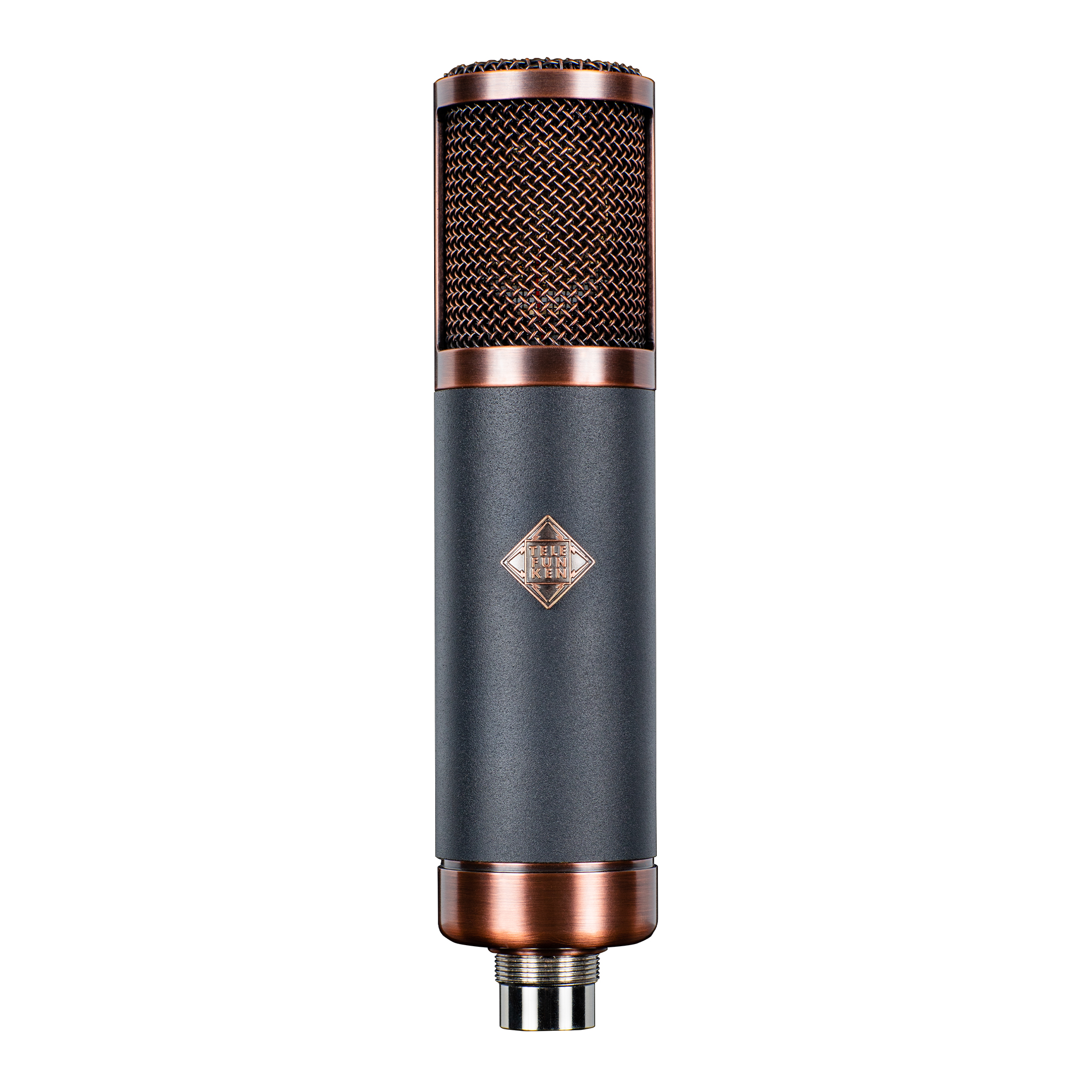
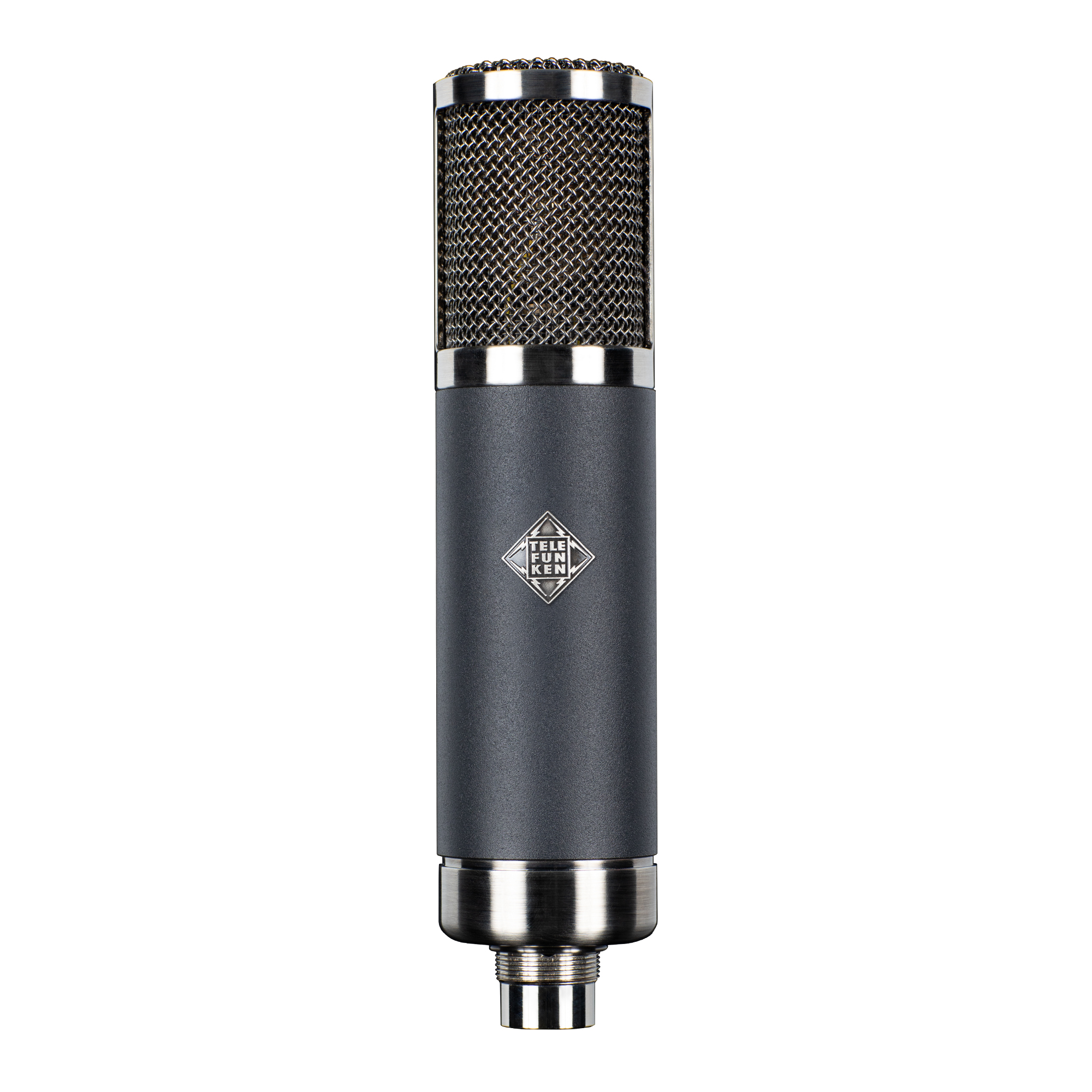
    The TF29 features a new old stock American-made 5654W vacuum tube, all-brass K67-style capsule, and a premium Swedish-made Lundahl output transformer. These components create a balanced frequency response and natural tonality, making the TF29 a trusty go-to choice.

    Every TF29 Copperhead microphone system comes with a fixed pattern M 902 Power Supply, M 803 Tube Microphone Cable, ZC03 Carrying Case, M 703 Shock Mount, M 782 Stand Mount, and Microphone Sleeve.”


    Type

    Vacuum Tube Condenser

    Polar Pattern Cardioid
    Frequency Range 20 Hz – 20 kHz, ±3 dB
    Power Source External Power Supply
    Capsule TK67S – Center Terminated Large Diaphragm, Single Membrane
    Tube NOS GE 5654W
    Transformer Lundahl LL1935
    Sensitivity 17 mV/Pa, ±1 dB
    THD at 1kHz, 1 Pa (Amplifier) < 0.3%
    Output Impedance < 300 Ω
    Maximum SPL (for 1% THD) 130 dB
    S/N Ratio 87 dBA
    Self Noise (Amplifier) 7 dBA
    Dimensions 200 mm L x 46 mm Dia
    Weight 650 g
    Included Accessories Tube Mic Cable, Power Supply, Shock Mount, Stand Mount, Mic Sleeve, Carrying Case
    Power Supply M 902 PSU
    Cable M 803
    Shockmount M 703, M 782
    Case ZC03


    Every TF29 Copperhead microphone system comes with a fixed pattern M 902 Power Supply, M 803 Tube Microphone Cable, ZC03 Carrying Case, M 703 Shock Mount, M 782 Stand Mount, and Microphone Sleeve.

  • TELEFUNKEN TF29 Stereo Set Copperhead Cardioid Large Diaphragm Vacuum Tube Condenser Microphone

    TELEFUNKEN TF29 Stereo Set Copperhead Cardioid Large Diaphragm Vacuum Tube Condenser Microphone

    “The TF29 Copperhead is an evolution of the CU-29 Copperhead, an original TELEFUNKEN Elektroakustik design that garnered fans for its natural and non-hyped tonality and unparalleled “quality for price”. The TF29 continues this reputation of outstanding sonic performance and value. It’s a workhorse microphone, accurately and honestly capturing vocals, acoustic and electric guitar, drums, and nearly any source put in front of it.

    The TF29 features a new old stock American-made 5654W vacuum tube, all-brass K67-style capsule, and a premium Swedish-made Lundahl output transformer. These components create a balanced frequency response and natural tonality, making the TF29 a trusty go-to choice.

    Every TF29 Copperhead Stereo Set system comes with two sonically matched microphones, a fixed pattern dual M 960S Power Supply, (2x) M 803 Tube Microphone Cables, (2x) M 703 Elastic Shock Mounts, (2x) Microphone Sleeves, and a Locking Flight Case. All the electronic components in each system are matched sonically and electronically, including matched capsules, transformers, and vacuum tubes. ”


    Type

    Vacuum Tube Condenser

    Polar Pattern Cardioid
    Frequency Range 20 Hz – 20 kHz, ±3 dB
    Power Source External Dual Power Supply
    Capsule TK67S – Center Terminated Large Diaphragm, Single Membrane
    Tube NOS GE 5654W
    Transformer Lundahl LL1935
    Sensitivity 17 mV/Pa, ±1 dB
    THD at 1kHz, 1 Pa (Amplifier) < 0.3%
    Output Impedance < 300 Ω
    Maximum SPL (for 1% THD) 130 dB
    S/N Ratio 87 dBA
    Self Noise (Amplifier) 7 dBA
    Dimensions 200 mm L x 46 mm Dia
    Weight 650 g
    Included Accessories 2x Tube Mic Cable, Dual Power Supply, 2x Shock Mount, 2x Stand Mount, 2x Mic Sleeve, Flight Case
    Power Supply M 901S PSU
    Cable M 803 (2x)
    Shockmount M 703 (2x), M 782 (2x)
    Case FC03S


    Every TF29 Copperhead Stereo Set system comes with two sonically matched microphones, a fixed pattern dual M 960S Power Supply, (2x) M 803 Tube Microphone Cables, (2x) M 703 Elastic Shock Mounts, (2x) Microphone Sleeves, and a Locking Flight Case.

  • TELEFUNKEN TF39 Copperhead Deluxe Three-Pattern Large Diaphragm Microphone

    TELEFUNKEN TF39 Copperhead Deluxe Three-Pattern Large Diaphragm Microphone

    “The TF39 Copperhead Deluxe is an expansion of the “Copperhead” sound with the addition of a dual membrane K67-style capsule, allowing for 3-pattern selection between cardioid, omnidirectional, and figure-8. This added feature set gives the TF39 greater flexibility and options in the studio. Sonically and component-wise, the two microphones are otherwise the same.

    The TF39 features a new old stock American-made 5654W vacuum tube, all-brass K67-style capsule, and a premium Swedish-made Lundahl output transformer. These components create a balanced frequency response and natural tonality, making the TF39 a trusty go-to choice.

    Every TF39 Copperhead Deluxe microphone system comes with a multi pattern M 903 Power Supply, M 803 Tube Microphone Cable, ZC03


    Type

    Vacuum Tube Condenser

    Polar Pattern Cardioid, Omnidirectional, Figure-8
    Frequency Range 20 Hz – 20 kHz, ±3 dB
    Power Source External Power Supply
    Capsule TK67 – Center Terminated Large Diaphragm
    Tube NOS GE 5654W
    Transformer Lundahl LL1935
    Sensitivity 17 mV/Pa, ±1 dB
    THD at 1kHz, 1 Pa (Amplifier) < 0.3%
    Output Impedance < 300 Ω
    Maximum SPL (for 1% THD) 130 dB
    S/N Ratio 87 dBA
    Self Noise (Amplifier) 7 dBA
    Dimensions 200 mm L x 46 mm Dia
    Weight 650 g
    Included Accessories Tube Mic Cable, Power Supply, Shock Mount, Stand Mount, Mic Sleeve, Carrying Case
    Power Supply M 903 PSU
    Cable M 803
    Shockmount M 703, M 782
    Case ZC03

    Every TF39 Copperhead Deluxe microphone system comes with a fixed pattern M 903 Power Supply, M 803 Tube Microphone Cable, ZC03 Carry Case, M 703 Shock Mount, M 782 Stand Mount, and Microphone Sleeve.

  • TELEFUNKEN TF39 Stereo Set Copperhead Deluxe Three-Pattern Large Diaphragm Microphone

    TELEFUNKEN TF39 Stereo Set Copperhead Deluxe Three-Pattern Large Diaphragm Microphone

    “The TF39 Copperhead Deluxe is an expansion of the “Copperhead” sound with the addition of a dual membrane K67-style capsule, allowing for 3-pattern selection between cardioid, omnidirectional, and figure-8. This added feature set gives the TF39 greater flexibility and options in the studio. Sonically and component-wise, the two microphones are otherwise the same.

    The TF39 features a new old stock American-made 5654W vacuum tube, all-brass K67-style capsule, and a premium Swedish-made Lundahl output transformer. These components create a balanced frequency response and natural tonality, making the TF39 a trusty go-to choice.

    Every TF39 Copperhead Deluxe Stereo Set system comes with two sonically matched microphones, a variable pattern dual M 901S Power Supply, (2x) M 803 Tube Microphone Cables, (2x) M 703 Elastic Shock Mounts, (2x) Microphone Sleeves, and a Locking Flight Case. All the electronic components in each system are matched sonically and electronically, including matched capsules, transformers, and vacuum tubes.


    Type

    Vacuum Tube Condenser

    Polar Pattern 9-Pattern Variable including Cardioid, Omnidirectional, Figure-8
    Frequency Range 20 Hz – 20 kHz, ±3 dB
    Power Source External Dual Power Supply
    Capsule TK67 – Center Terminated Large Diaphragm
    Tube NOS GE 5654W
    Transformer Lundahl LL1935
    Sensitivity 17 mV/Pa, ±1 dB
    THD at 1kHz, 1 Pa (Amplifier) < 0.3%
    Output Impedance < 300 Ω
    Maximum SPL (for 1% THD) 130 dB
    S/N Ratio 87 dBA
    Self Noise (Amplifier) 7 dBA
    Dimensions 200 mm L x 46 mm Dia
    Weight 650 g
    Included Accessories 2x Tube Mic Cable, Dual Power Supply, 2x Shock Mount, 2x Stand Mount, 2x Mic Sleeve, Flight Case
    Power Supply M 901S PSU
    Cable M 803 (2x)
    Shockmount M 703 (2x), M 782 (2x)
    Case FC03S


    Every TF39 Copperhead Deluxe Stereo Set system comes with two sonically matched microphones, a variable pattern dual M 901S Power Supply, (2x) M 803 Tube Microphone Cables, (2x) M 703 Elastic Shock Mounts, (2x) Microphone Sleeves, and a Locking Flight Case

  • TELEFUNKEN TF47 Three-Pattern Large Diaphragm Microphone

    TELEFUNKEN TF47 Three-Pattern Large Diaphragm Microphone

    “The TF47 is a new design based on the “German” sound, drawing inspiration from the historic U47 and M49. With a deep low end and a forward midrange, the TF47 is excellent for adding depth and presence to any source. These characteristics make it especially ideal for recording vocals, guitar amps, and drums.

    At the heart of the TF47 is an all-brass K47-style capsule, new old stock 5840W vacuum tube, and custom-made historically accurate BV8 transformer (as found in the U47). These components deliver a warm and punchy sound reminiscent of the U47 with a pleasant top end articulation that sits perfect in a mix.

    Every TF47 microphone system comes with a multi pattern M 903 Power Supply, M 803 Tube Microphone Cable, ZC03 Carrying Case, M 703 Shock Mount, M 782 Stand Mount, and Microphone Sleeve.
    ”


    Type

    Vacuum Tube Condenser

    Polar Pattern Cardioid, Omnidirectional, Figure-8
    Frequency Range 20 Hz – 20 kHz, ±3 dB
    Power Source External Power Supply
    Capsule TK47 – Center Terminated Large Diaphragm
    Tube NOS Philips/Raytheon 5840W
    Transformer TELEFUNKEN Elektroakustik BV8
    Sensitivity 22 mV/Pa, ±1 dB
    THD at 1kHz, 1 Pa (Amplifier) < 0.3%
    Output Impedance < 300 Ω
    Maximum SPL (for 1% THD) 125 dB
    S/N Ratio 84 dBA
    Self Noise (Amplifier) 10 dBA
    Dimensions 200 mm L x 46 mm Dia
    Weight 710 g
    Included Accessories Tube Mic Cable, Power Supply, Shock Mount, Stand Mount, Mic Sleeve, Carrying Case
    Power Supply M 903 PSU
    Cable M 803
    Shockmount M 703, M 782
    Case ZC03


    “Every TF47 microphone system comes with a multi pattern M 903 Power Supply, M 803 Tube Microphone Cable, ZC03 Carrying Case, M 703 Shock Mount, M 782 Stand Mount, and Microphone Sleeve.”

  • Telefunken U-48 Diamond Series Microphone

    Telefunken U-48 Diamond Series Microphone

    Whether you’re documenting a symphony, a crooner, or any type of aspect of present day new music, you’ll find an excellent resource in the U47. Its reliable mid-range as well as extended low-end response dance from your ears … much as a vintage wine dances from the taste. Anything, from vocals to the loudest of guitar sounds, complete on orchestral recording, lovely stabilizer vocal arrangements, or a chamber ensemble will profit extremely from the rich and also lively tone of this sensational microphone.

    Given that its original progression in 1946, the TELEFUNKEN U 47 has actually been the microphone of selection for generations of recording professionals. The very first condenser microphone to deliver selectable polar designs (cardioid as well as omni), the original U47 even included the popular M7 pill which had actually been developed in 1928 by Georg Neumann. To this capsule was incorporated an amplifier developed from army plethora VF-14 tubes (they had actually been used in industry and plane radios), as well as BV8 outcome transformer. The combination of these parts developed a sonic high quality that was completely uncommon in the English speaking globe of the mid-1940s when darker seeming, much less detailed bow mics were the requirement. The introduction of the U47 brought a new level of allegiance to the audio planet, as well as is still thought of to be one of the finest microphones ever generated.

    Upon initial look of the brand-new U47 from TELEFUNKEN Elektroakustik, it’s effortless to see the “loved ones resemblance.” The large, chrome head grille properties our newly made M7 capsule. Its matte nickel completed body properties a brand-new BV8 output transformer and also our brand-new VF-14k vacuum tube; a “plug and also play” substitute for the unusual VF-14M tubes located in the initial. The timeless “TELEFUNKEN” diamond logo design happily decorates the front of the body tube. All of these accoutrements show that this mic means business.

    Whether you’re videotaping a symphony, a “crooner,” or any kind of element of contemporary popular music, you’ll find a great tool in the U47. Its definitive mid-range and extended low-end response dance from your ears … much as a vintage wine dances from the taste. Everything, from vocals to the loudest of guitar sounds, full on orchestral audio, beautiful stabilizer singing setups, or a chamber ensemble will definitely benefit extremely from the rich as well as vibrant tone of this sensational mic.

  • Telefunken U47 & U48 Stereo Set

    Telefunken U47 & U48 Stereo Set

    Specify the “way back” device for 1958 when you might have walked out of Manny’s Music on 48th St. in New york city City with a shiny brand-new Gold Top Les Paul for under $ 1000. If you were an audio geek, you could have left of Gotham Sound [located simply a few blocks away] with a brand new “Studio Set” of U-47 or U-48 mics for around the very same rate. Unfortunately, most of us just weren’t operating specialists in 1958 so we missed that boat, but would not it have been excellent?

    In maintaining with the lengthy status tradition, TELEFUNKEN Elektroakustik have offered a salute back to 1958 when both the U47 and U48 were supplied in 3 distinct package deals. The U-47 and also U-48 were both given in what was called a “Stereo Set” that featured a sequentially serial numbered pair of U-47 or U-48 mics over a dual [2 mic qualified] power quantity, as well as the “Studio Set,” which was a singular U-47 that was matched to a U-48.

    The biggest distinction in between the modern versions and just what was offered in 1958 is that the collections from 1958 were not “matched.” Now they are! Each part is matched for sonic attributes. The M7 pills are hand selected as well as checked for consistent habits in our Connecticut lab, along with matched custom BV8 outcome transformers, VF14K tubes in addition to the even more routine resistors and also capacitors. In addition, a special identification number team has actually been created for the contemporary version of the “Studio Set” making these a very rare set of birds which are not only exceptionally useful, yet additionally uncommon and collectible.

    Over the U-47 stereo set you now have the option of X/Y recording as well as spaced omni videotaping with one handy power source and two mythical mics. With the U-48 stereo set you have the capacity to operate X/Y, M/S, or Bluemlein mic methods [” crossed” figure 8 pick up pattern for “stereo omni” protection], again with one advantageous power source. Of course each microphone can be made use of as a single mic mono resource, as is so typically seen in historical photos of everybody from Sinatra to The Beatles.

    Unlike the initial collections, these collections are delivered in a stylish leather bound, rugged and also hassle-free safety carrying case as relocating from studio to studio is far even more prevalent now than it was in 1958. The soft fabric inside material for the microphones and strength supply recreations the classic TELEFUNKEN Elektroakustik logo makes sure to make you grin over pride every time you start the case to extract your vintage tools.

    As this in not 1958, TELEFUNKEN Elektroakustik has made STEREO sets offered for our other timeless mics. The ELA M 250/251, ELA M 250E/251E, in addition to the C12 and also fore pointed out U47s and U48s.

    Each part for each mic is hand picked and matched to permit as close match in between the two mics in each system as is feasible. Pills are tuned to each some other; transformers and also tube are examining for matched gain and also regularity response. These sets give the individual the knowledge and also pleasure that the tools they are using will definitely offer identical responses for their crucial stereo audio!

    Every great singer deserves an amazing microphone, and for more than 60 years the U47 has been that microphone. Its authoritative mid-range and extended low-end response have made the TELEFUNKEN U47 the “go to” standard for any serious recording studio.

    Everything, from vocals and loud guitar sounds to full on orchestral recording and chamber ensembles, will benefit wildly from the rich and vibrant tone of this stunning microphone. The TELEFUNKEN Elektroakustik recreation of the U47 large diaphragm tube microphone is exact in every detail, down to the historically accurate BV8 output transformer and M7 capsule.

  • Telefunken U47 Diamond Series Microphone

    Telefunken U47 Diamond Series Microphone

    Whether you’re documenting a symphony, a crooner, or any type of aspect of present day new music, you’ll find an excellent resource in the U47. Its reliable mid-range as well as extended low-end response dance from your ears … much as a vintage wine dances from the taste. Anything, from vocals to the loudest of guitar sounds, complete on orchestral recording, lovely stabilizer vocal arrangements, or a chamber ensemble will profit extremely from the rich and also lively tone of this sensational microphone.

    Given that its original progression in 1946, the TELEFUNKEN U 47 has actually been the microphone of selection for generations of recording professionals. The very first condenser microphone to deliver selectable polar designs (cardioid as well as omni), the original U47 even included the popular M7 pill which had actually been developed in 1928 by Georg Neumann. To this capsule was incorporated an amplifier developed from army plethora VF-14 tubes (they had actually been used in industry and plane radios), as well as BV8 outcome transformer. The combination of these parts developed a sonic high quality that was completely uncommon in the English speaking globe of the mid-1940s when darker seeming, much less detailed bow mics were the requirement. The introduction of the U47 brought a new level of allegiance to the audio planet, as well as is still thought of to be one of the finest microphones ever generated.

    Upon initial look of the brand-new U47 from TELEFUNKEN Elektroakustik, it’s effortless to see the “loved ones resemblance.” The large, chrome head grille properties our newly made M7 capsule. Its matte nickel completed body properties a brand-new BV8 output transformer and also our brand-new VF-14k vacuum tube; a “plug and also play” substitute for the unusual VF-14M tubes located in the initial. The timeless “TELEFUNKEN” diamond logo design happily decorates the front of the body tube. All of these accoutrements show that this mic means business.

    Whether you’re videotaping a symphony, a “crooner,” or any kind of element of contemporary popular music, you’ll find a great tool in the U47. Its definitive mid-range and extended low-end response dance from your ears … much as a vintage wine dances from the taste. Everything, from vocals to the loudest of guitar sounds, full on orchestral audio, beautiful stabilizer singing setups, or a chamber ensemble will definitely benefit extremely from the rich as well as vibrant tone of this sensational mic.

  • Telefunken U48 Diamond Series

    Telefunken U48 Diamond Series

    Since its original development in 1946, the TELEFUNKEN U 47 continues to be the microphone of choice for generations of recording professionals. The first condenser microphone to provide selectable polar patterns (cardioid and omni), the original U47 also showcased the famous M7 capsule which had been developed in 1928 by Georg Neumann. To this particular capsule was added an amplifier constructed from military surplus VF-14 tubes (they had been used in field and aircraft radios), and BV8 output transformer. The combination of these components created a sonic quality that was absolutely unheard of in the English speaking world of the mid-1940s when darker sounding, less precise ribbon microphones were the standard. The development of the U47 brought a new level of constancy to the audio world, and is still considered to be one of the finest microphones ever produced.

    Upon first glance of the new U47 from TELEFUNKEN Elektroakustik, it’s easy to see the “family resemblance.” The large, chrome head grille houses our newly manufactured M7 capsule. Its matte nickel finished body houses a new BV8 output transformer and our new VF-14k vacuum tube; a “plug and play” alternative to the rare VF-14M tubes perfectly found on the original. The classic “TELEFUNKEN” diamond logo proudly adorns the front of the body tube. These accoutrements show that this microphone means business.

    Whether you’re recording a concert, a “crooner,” or any part of modern music, you will find a great tool in the U47. Its authoritative mid-range and extended low-end response dance from your ears . . . much as a vintage wine dances from the palate. Everything, from vocals to the loudest of guitar sounds, full on orchestral recording, beautiful backing vocal arrangements, or a chamber ensemble may gain advantage wildly from the rich and vibrant tone of this stunning microphone.

    Find out why engineers, producers, and artists all over the globe have made the new U47 from TELEFUNKEN Elektroakustik their go-to microphone. Contact one of our resellers to request a demo.